Yves Koch · 8 October 2026
Patterns of Data Retention Failures in Relocated Digital Annotation Systems for Academic Groups
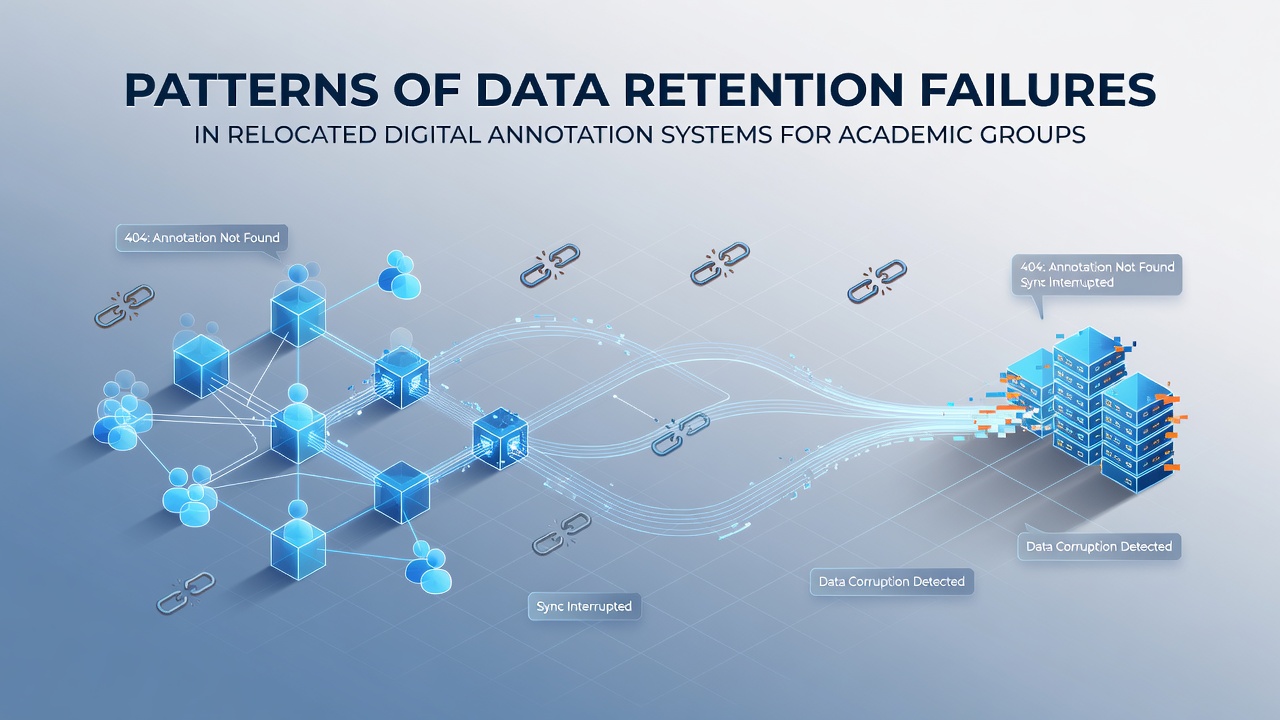
Academic groups frequently relocate digital annotation systems when shifting between institutions, upgrading infrastructure, or adopting new collaborative platforms, and these moves often reveal recurring patterns of data retention failures that disrupt research continuity. Researchers document cases where annotation layers, metadata tags, and version histories fail to transfer completely during server migrations, leaving scholars with incomplete records of their collaborative markup on documents and datasets. Data indicates that such issues cluster around specific stages of the relocation process, including pre-migration audits, transfer execution, and post-migration verification, with larger academic teams experiencing more pronounced gaps because of the volume and complexity of shared annotations.
Recurring Failure Modes During System Relocations
Observers note that incomplete metadata preservation stands out as one of the most consistent problems when annotation systems move to new hosting environments, since timestamps, user attribution fields, and relational links between annotations often drop out during export and import routines. Studies from research computing centers show that these losses occur more frequently when teams rely on proprietary formats that lack standardized export schemas, forcing manual reconstruction efforts after the fact. Another pattern involves permission mismatches that emerge once systems reach their new locations, where previously accessible annotations become locked or invisible to original contributors because access control lists do not migrate alongside the content itself.
Timing-related failures also appear regularly in relocation logs, particularly when migrations span multiple time zones or coincide with peak academic calendar periods such as grant deadlines. In October 2026, several university consortia reported annotation data corruption tied to daylight saving transitions during batch transfers, as synchronization scripts failed to account for clock offsets between source and destination servers. Those who have examined these incidents point to insufficient testing of temporal consistency checks as a contributing factor that compounds retention shortfalls across multi-institutional projects.
Impact on Research Workflows and Collaboration
Academic groups that depend on layered annotations for literature reviews, data interpretation, and co-author feedback face direct setbacks when retention gaps appear after relocation, because missing markup breaks the chain of evidence that supports published findings. Figures from institutional technology assessments reveal that recovery times for lost annotations average several weeks per project, during which team members must re-annotate core documents from scratch while cross-referencing original source materials. What's interesting is how these interruptions cascade into broader workflow delays, since downstream tasks such as peer review responses and supplementary data submissions stall until the annotation layers are rebuilt.
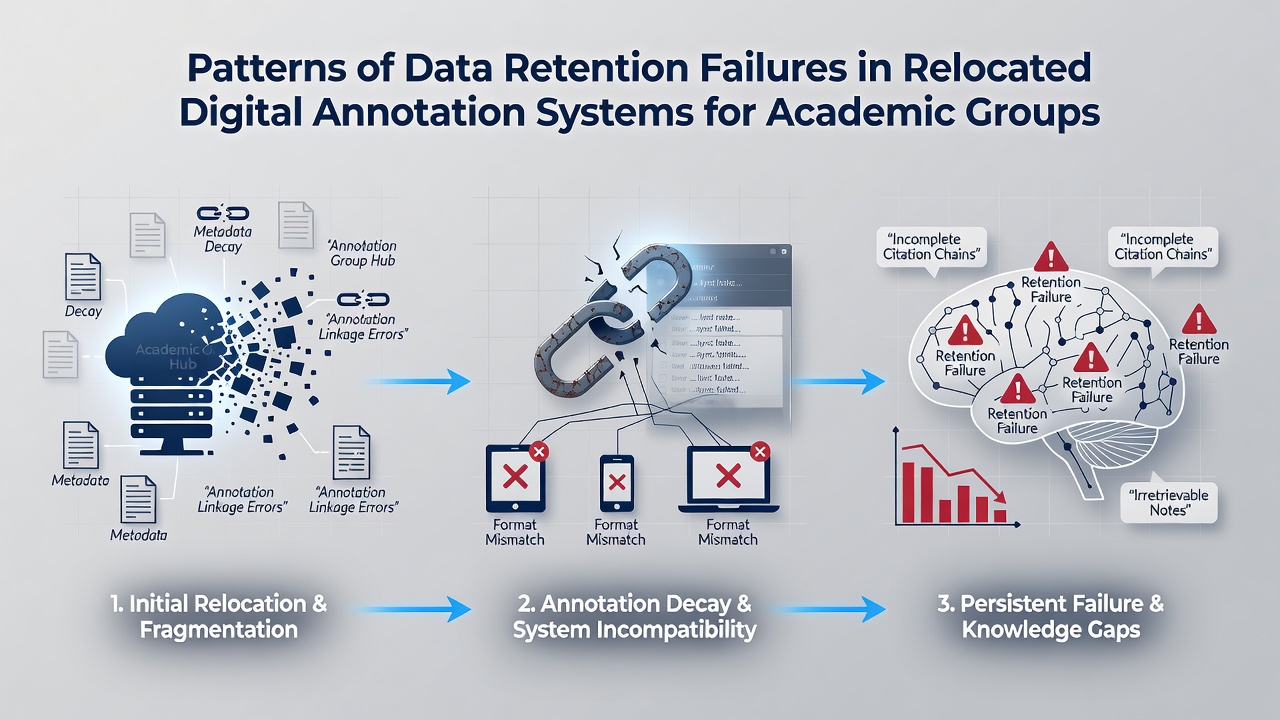
Case examples from European university networks illustrate how one group's relocation of a shared annotation platform resulted in the permanent loss of threaded discussion annotations attached to experimental protocols, forcing the team to rely on secondary notes stored outside the system. Similar patterns surface in North American and Australian research settings, where data sovereignty requirements add extra steps to relocation planning and sometimes introduce additional points of failure during compliance checks. Evidence suggests that groups operating across borders encounter heightened risks because differing regulatory frameworks, such as those outlined by the Australian Information Commissioner, impose distinct retention mandates that conflict with the export capabilities of the annotation software in use.
Contributing Technical and Organizational Factors
Technical audits conducted by academic IT departments consistently identify inadequate backup versioning as a root contributor to retention failures, since many annotation systems maintain only a limited number of snapshots before older versions are purged during the relocation handoff. Organizational factors compound these issues when project leads underestimate the scale of annotation data accumulated over multi-year studies, resulting in truncated transfer windows that prioritize core files over ancillary markup. Researchers have observed that teams without dedicated data stewardship roles during migrations show higher rates of overlooked annotation subsets, particularly those embedded within image files or spreadsheet cells that require specialized extraction tools.
Integration challenges with third-party authentication services further complicate retention outcomes, as credential mappings break during the move and prevent full access to annotation histories stored under legacy user profiles. A report compiled by the National Science Foundation on research data infrastructure highlights how such authentication gaps have affected multiple funded projects that relocated annotation environments between 2024 and 2026, underscoring the need for preemptive mapping of user identities across platforms.
Conclusion
Patterns of data retention failures in relocated digital annotation systems for academic groups center on metadata loss, permission inconsistencies, and timing mismatches that surface at predictable points in the migration sequence. Institutions continue to refine their relocation protocols in response to documented incidents, yet the underlying challenges persist across different geographic and disciplinary contexts. Ongoing monitoring of these patterns provides academic teams with clearer benchmarks for evaluating the completeness of their annotation transfers and for prioritizing safeguards that protect the integrity of collaborative research records.