Sam Friedrich · 10 September 2026
The Evolution of Note-Taking Ecosystems and Their Integration Challenges in Subscription Platforms
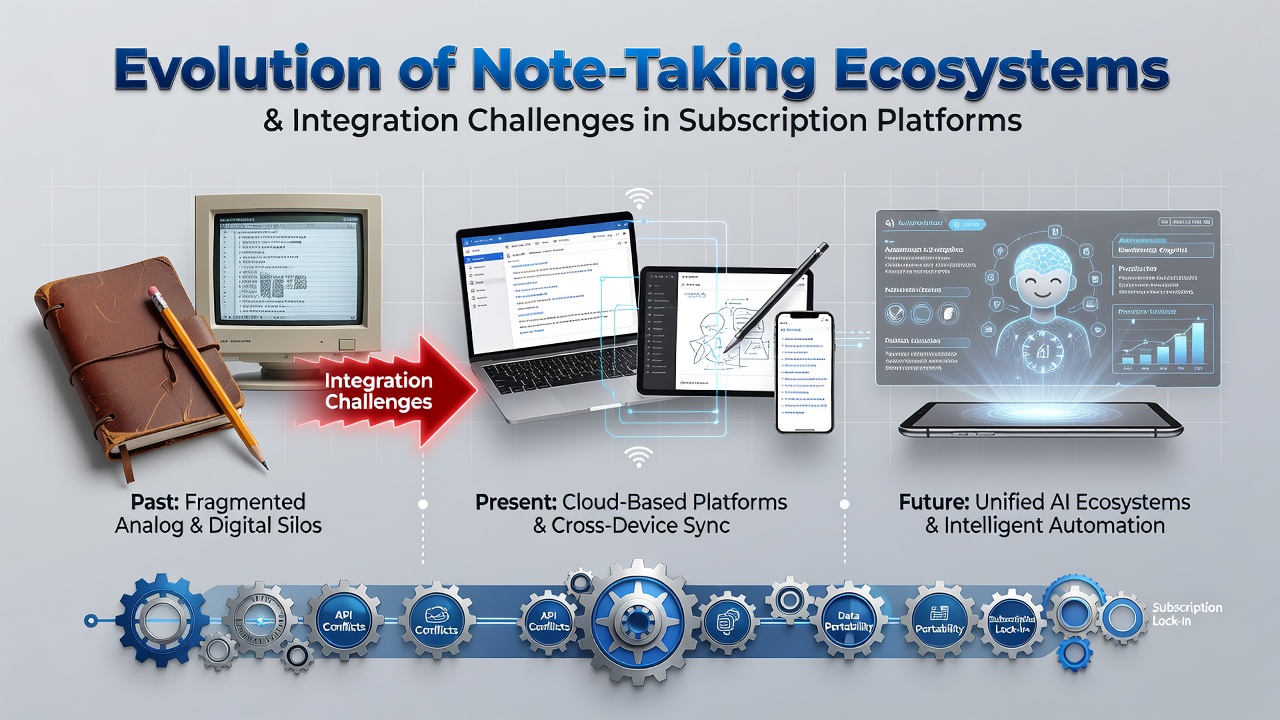
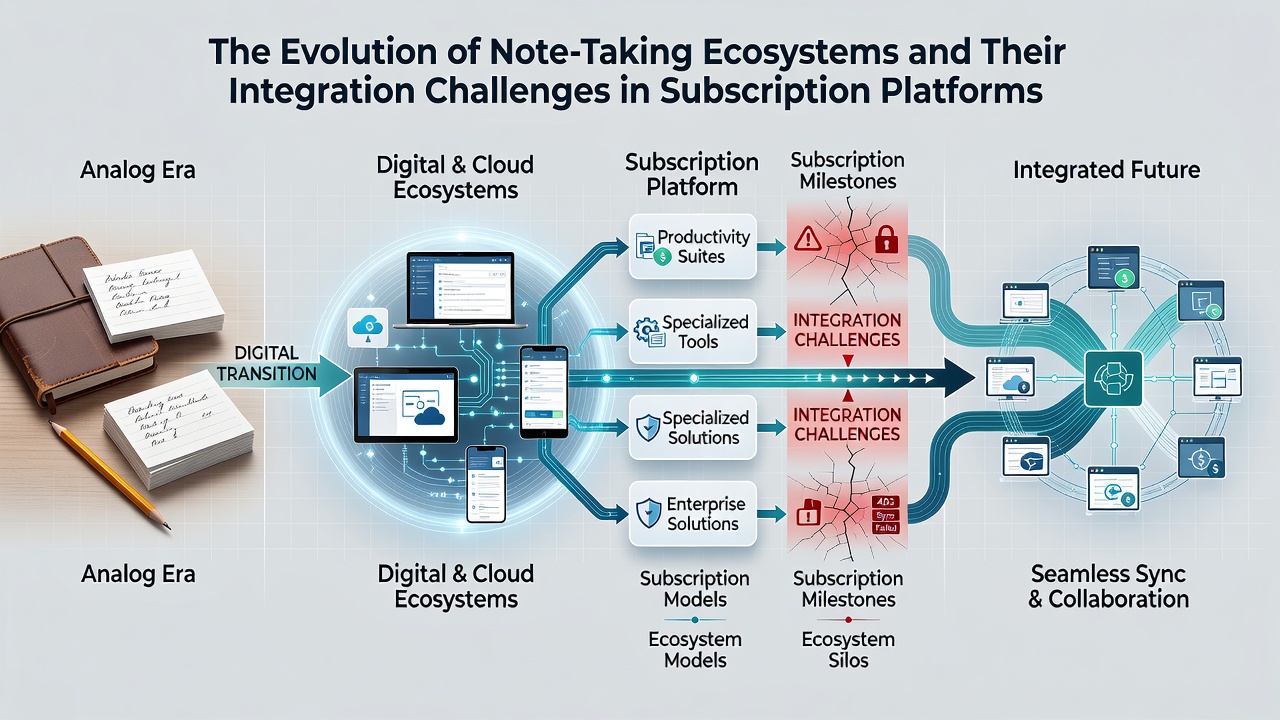
Early note-taking relied on physical journals and index cards while the transition to digital formats began in the 1980s with basic word processors and personal digital assistants that stored text files locally. By the early 2000s cloud storage services allowed applications such as Evernote and Microsoft OneNote to synchronize content across devices yet these systems operated largely in isolation from broader software ecosystems. Subscription models gained traction after 2010 as companies shifted from one-time purchases to recurring revenue structures which introduced new layers of user authentication billing cycles and feature gating.
Expansion of Interconnected Note-Taking Platforms
Modern note-taking ecosystems now encompass mobile apps desktop clients browser extensions and third-party plugins that exchange data through standardized APIs. Platforms like Notion and Obsidian have incorporated relational databases and graph views while maintaining compatibility with external calendars task managers and communication tools. Data from industry analyses shows that over 60 percent of productivity software users maintain accounts across multiple note-taking services simultaneously which creates demand for seamless synchronization protocols and unified search functions. In September 2026 several major providers released updated API endpoints that support real-time collaboration within subscription tiers while preserving offline access for lower-priced plans.
Technical and Operational Integration Hurdles
Subscription platforms must reconcile payment processing systems with note-taking functionality because billing events often trigger access changes that affect data visibility and export permissions. Developers encounter compatibility issues when linking note repositories to customer relationship management tools or enterprise resource planning suites since authentication tokens and data schemas rarely align without custom middleware. Observers note that encryption standards vary across services which complicates secure handoffs during user migrations or team account transfers. Research conducted at Canadian academic institutions indicates that integration failures account for approximately 25 percent of support tickets submitted to mid-sized SaaS providers in this category.
Regulatory and Data Governance Pressures
Government regulations such as the European Union's Digital Services Act and Australia's Privacy Act require subscription platforms to maintain clear audit trails for user data while allowing portability between competing services. These mandates affect how note-taking ecosystems handle retention policies and deletion requests because content often includes personal identifiers and proprietary project information. Figures released by the Australian Competition and Consumer Commission reveal that complaints regarding data access in subscription-based productivity tools rose 18 percent between 2024 and 2025. Platform operators therefore invest in standardized export formats and consent management interfaces to satisfy cross-border requirements without disrupting core note synchronization features.
Case Examples from Industry Implementations
One enterprise deployment at a multinational consulting firm demonstrated successful linkage between a primary note-taking application and an existing subscription billing engine yet required six months of iterative testing to resolve conflicts between role-based permissions and recurring payment status updates. Another instance involved a university research group that adopted an open-source note platform integrated with institutional single sign-on systems and discovered that subscription upsell prompts interfered with grant-funded collaborative workspaces. Those who've examined these implementations report that pre-built connectors from payment processors reduce setup time yet still demand ongoing maintenance when either the note-taking service or the billing provider releases version updates.
Future Trajectory and Ongoing Developments
Emerging standards for data interchange such as the Portable Note Format initiative aim to reduce friction during platform switches while subscription providers explore usage-based pricing that ties feature access directly to storage volume or collaboration participant counts. Academic papers from institutions in the Asia-Pacific region continue to analyze how these pricing structures influence adoption rates among students and small research teams. Integration challenges persist around offline-first architectures and conflict resolution during simultaneous edits yet incremental improvements in conflict-free replicated data types offer measurable progress toward more resilient ecosystems.
Conclusion
The progression from standalone digital notebooks to integrated subscription ecosystems reflects broader shifts in software delivery and user expectations. Technical barriers around API compatibility payment synchronization and regulatory compliance remain central concerns for providers and users alike while ongoing standardization efforts and regional policy updates continue to shape development priorities. Data from multiple jurisdictions confirms that platforms addressing these integration points early gain measurable advantages in user retention and cross-service adoption rates.